A freelance journalist and incoming medical student, Aanika Parikh is passionate about storytelling and conveying communities’ lived experiences. In this issue, Aanika explores the value of older adults in society and how different cultures approach elder care. She’s especially interested in health issues and the community impact of public policies.
For many families, caregiving is a way to honor those who came before them

Fact checked by Shannon Sparks
In Filipino, utang na loob describes an enduring debt to someone who has done a favor for you — a debt of gratitude. For Stacy Subida, this concept represents gratitude toward family members and manifests as a reciprocal, intergenerational relationship.
Subida’s Filipino American values have influenced both her personal commitment to aging family members and her career as a supervisor in the Senior Services Division of Chicago’s Department of Family and Support Services (DFSS).
“My grandparents immigrated to the States to help with childcare. So, intergenerational, interconnected care, for me, started at a very early age,” Subida says.
Her grandparents have since passed away, but her parents are now aging. “We’re trying to help them navigate the systems, just like we helped my grandparents. And my parents are very much involved in helping take care of my children, as well. So, it’s kind of this cycle of interconnected care,” Subida says.
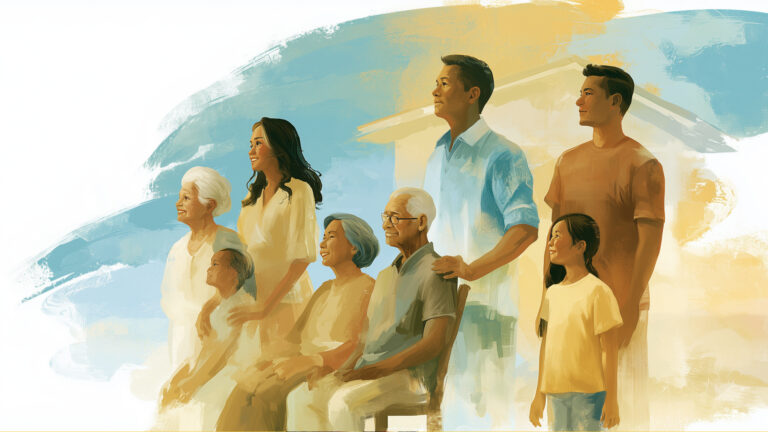
She attributes this cycle of intergenerational care to filial piety, a Confucian concept that emphasizes respect, honor, and love for older family members. The principle is central to many Asian cultures and contributes to cultural variations in caregiving for seniors across the country.
Demographic data support the idea that culture influences caregiving for older family members. One-quarter of older adults nationwide identified as members of a racial or ethnic minority group in 2022. Asian Americans, Pacific Islanders, Black Americans, and Hispanic Americans are more likely to live in multigenerational households than their European American counterparts, according to a 2022 study from the Pew Research Center. Additionally, foreign-born individuals are more likely to live in multigenerational households.
Caring for those who cared for us
Jyoti Trivedi, 73, is of Indian descent and lives with her family in a multigenerational home. Trivedi says that traditionally, daughters move in with their in-laws after marriage, so the responsibility for caring for aging parents falls to sons and daughters-in-law.
“In our culture, aging parents stay with their children.
And I, too, wish that I am able to live with my children as long as I live.” Trivedi currently lives in a multigenerational household with her two sons, daughters-in-law, and grandchildren.
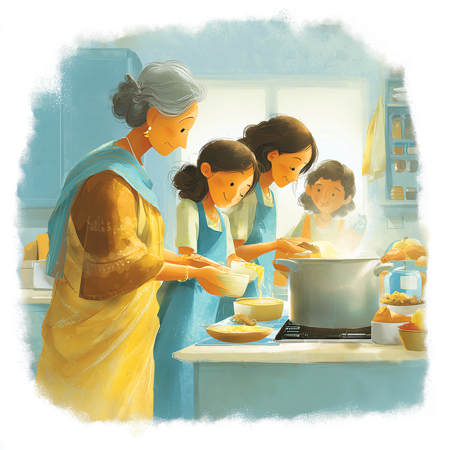 “When I was little, my parents taught me how to walk,” Trivedi says. “When my children were little, I taught them how to walk. I took them to school, I fed them, I took complete care of them. Now that their parents are older and need support, their children have a duty to care for them.”
For Trivedi, reciprocating this care means showing gratitude for the sacrifices parents make for their children.
Araceli Ramirez, a Chicago-based journalist with Mexican roots, says that in Mexican culture, the oldest child often assumes caregiving responsibilities for aging parents, and families generally prefer multigenerational living arrangements over assisted living or nursing homes. Her parents live with her grandmother.
Ramirez says Latino families’ dedication to elder caregiving stems from the concept of familismo — a deep commitment to both immediate and extended family. Many Latino families share a strong belief that family is a shared responsibility and that it is a tradition to care for those who raised you.
This reciprocity of care traces its roots to gratitude. “I know within my family and many Latino families, we think of the sacrifices our parents and grandparents made to move to this country,” Ramirez says. “It’s kind of a no-brainer to help those who came before us and helped us when we were young.”
Older generations also hold family traditions, and their sacrifices often give younger generations more opportunities. “They pass down recipes and teach us how to cook certain dishes, share stories about growing up in another country, keep family traditions alive, and pass down language, faith, and life lessons that shape the family,” Ramirez says.
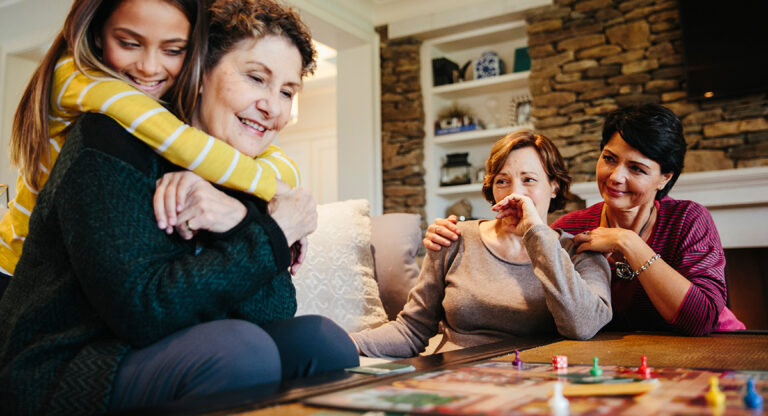
Tight-knit family relationships between generations enable respect and caregiving traditions to pass from one generation to the next — a theme present across many cultures. For instance, Trivedi says that she prays and performs religious rituals with her granddaughter before school, encourages her to speak in their native language (Gujarati), and participates in daily activities with her.
Trivedi recalls her sons and daughters-in-law witnessing her caring for her in-laws. Now, her 5-year-old granddaughter sees her own mother taking care of Trivedi.
Balancing tradition with modern realities
While numerous factors influence caregiving within individual families, the strong collectivist nature of minority cultures shapes caregiving norms.
For instance, cultural norms can influence caregivers’ use of social services. Subida presented with colleagues from the American Society on Aging about family caregiving in the Asian American, Native Hawaiian, and Pacific Islander (AANHPI) community. She says that, in general, access to formal caregiving services in the AANHPI community is limited. “That has to do with language access or, perhaps, not being familiar with the systems and really relying on family members to provide that care,” she says.
Subida noticed that terminology also contributes to underutilization. Many consider the term “caregiver” a formal or professional term.
“It’s like, ‘No, I’m just taking care of my mom. I’m just taking care of my dad,’” she says. At the Department of Family and Support Services, Subida is working to help individuals self-identify as caregivers by discussing specific tasks, such as grocery shopping or going to medical appointments, with the person they support.
Researchers also found that older adults in the Asian American, Native Hawaiian, and Pacific Islander communities frequently downplay their needs and symptoms to avoid placing further stress on family caregivers.
Caregivers report feeling emotional conflict with cultural expectations when older family members’ medical needs require assisted living facilities. Being familiar with cultural caregiving norms enables medical and social service providers to recognize and address these unique challenges in a culturally sensitive manner.
The immigration experience can make it difficult for cultural caregiving norms to survive in the United States. Santosh Kumar, founder and executive director of Metropolitan Asian Family Services and Universal Metro Asian Services, says that because degrees earned by immigrants in their home countries are often unrecognized in the U.S., they face significant economic struggles. Further, Kumar says that women who may not have worked in their home country must work in the U.S. to make ends meet. “So, there’s no time left for senior care,” Kumar says.
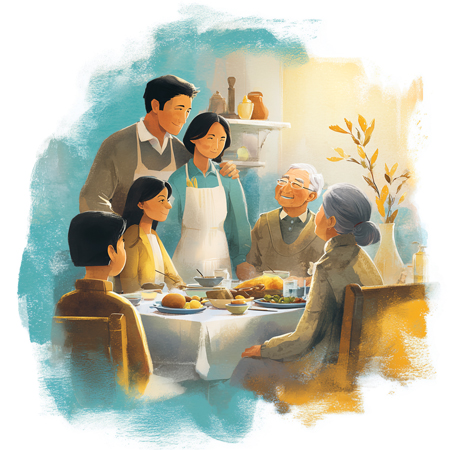 Subida stresses the importance of social services that meet caregivers’ cultural norms. Chicago DFSS partners with community-based organizations to serve older adults and caregivers in culturally specific ways, including the Chinese American Service League (CASL), which primarily serves Asian communities. The organizations provide adult day care and culturally relevant in-home services, literacy courses, immigration support, and more.
Trivedi started attending the adult day care program after experiencing some mental health struggles when her husband died. Universal Metro Asian Services helped her through her grief. “I didn’t do anything after my husband passed. Now, I sing, dance, and talk to everyone. Everyone is my friend,” she says.
Kumar sees the work as helping family members remain their parents’ primary caregivers while also encouraging them to accept support from their community.
For families like Trivedi’s, caregiving is both a responsibility and a way to honor those who came before them. “When my daughter-in-law eventually sits in my seat,” she says, “her daughter will also treat her the same way.”