Dawn is a food-allergy mom and journalist. She loves swimming and traveling, learning new food hacks and getting off the beaten path.
The challenges and rewards of caring for young children and aging parents at the same time

Fact checked by Shannon Sparks
Emily Ellison wanted to help. She just wasn’t sure how to manage everything.
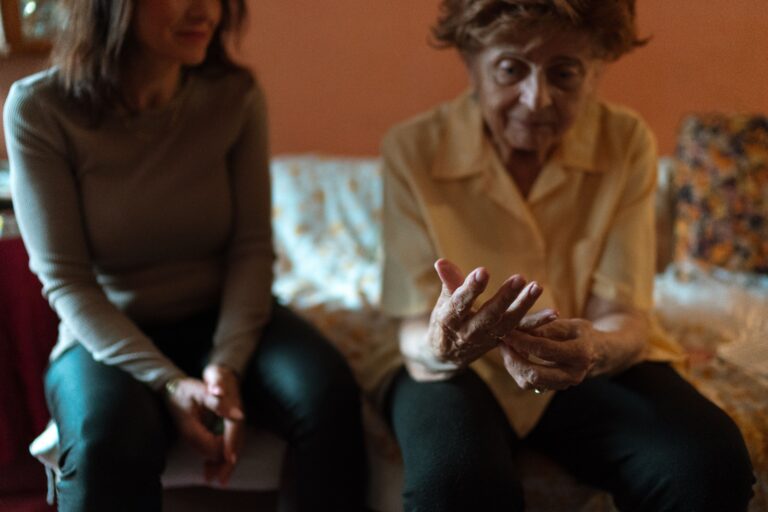
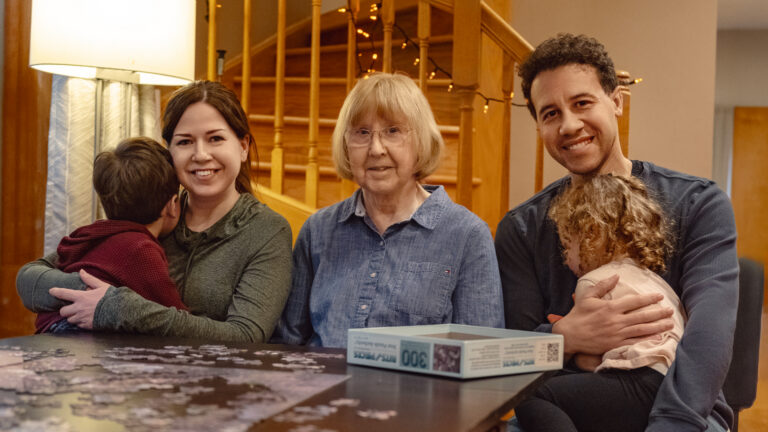
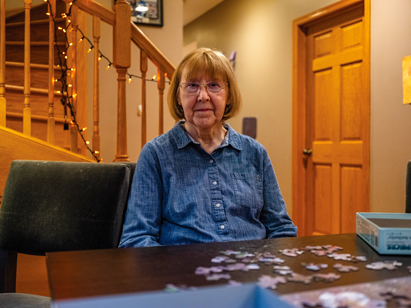
The Wicker Park mom was juggling the demands of raising her 3- and 6-year-old children while caring for her 73-year-old mother-in-law, Barbara Friz-Ellison, who has Parkinson’s disease, fronto-temporal lobar degeneration, and Lewy body dementia.
The diseases are difficult. Words go missing, and people have trouble maintaining a train of thought as they become more easily distracted. Anxiety, frustration, paranoia, and hallucinations can all happen to varying degrees, depending on the person.
“It’s a hard disease on the person who has it, and it’s a hard disease on the people who are caring for them,” Ellison says. Especially when that person is also caring for people at the other end of the age spectrum.
As Friz-Ellison loses her words and memories, Ellison’s children are just starting to create theirs.
Nearly 30% of caregivers are in the “sandwich” of caregiving — caring for their children and older loved ones, according to a 2025 AARP study.
“It’s primarily women who are taking care of both ends of the spectrum,” says Colleen Ceh Becvar, a gerontologist and president of the Midwest Chapter of the Aging Life Care Association. And it’s happening because people are living longer and having children later in life.
Yet balancing care for younger children and an aging adult is complex.
For Ellison, the mental load includes medical appointments, gymnastics, and school events. She handles her mother-in-law’s grocery shopping and medication refills.
She schedules follow-up medical appointments and fills out forms.
She’s also there for her own children when they’re feeling overwhelmed or need extra attention. “People close to me turn to me for emotional support,” Ellison says. “I am the human shock absorber.”
Ellison’s husband, Nehemiah “Neo” Ellison, acknowledges that much of the day-to-day work falls to his wife.
Balancing parenting and elder care
Six years ago, Friz-Ellison helped with childcare during the pandemic. Then the family started noticing changes. Ellison’s mother-in-law had more significant memory lapses, forgetting the names of people and her son’s childhood. “It trickles in, and her words leave her,” Neo says. “She’d hand me a cucumber and say, ‘Here’s the cabbage.’”
Friz-Ellison pushed for a diagnosis because she felt like something was wrong. A Northwestern Medicine neurologist made her diagnosis in 2022.
“Some people with dementia are treated like you are unable to do anything. I’m not that way,” Friz-Ellison says. “I’ve had some people who have been hostile to me. Others are amazed that I remember things.”
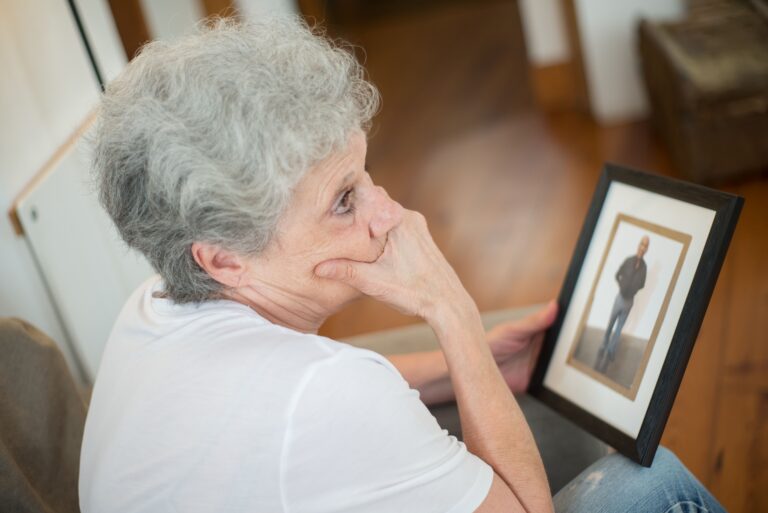
The diagnoses have stolen much of her working memory. Short-term memory is gone. Long-term can be hard to find. “Things she can use to connect to it are very precious to her,” Neo says. Pictures, yearbooks, even baby clothes.
When Friz-Ellison speaks, her words come in starts and stops. “Be patient with me,” she says. “Sometimes I can visualize it, but I can’t put the letters together for a word. The important thing is to stay positive.”
She says she can tell when she’s having a difficult day. “It’s a buildup,” she says. “There is so much fatigue. I can’t focus, and it’s better to chill out.”
For Friz-Ellison, that means drinking a glass of ice water, listening to music, chatting with friends and family. Or sitting quietly, she says, “and letting them talk around you.”
Moving in
When she was initially diagnosed, Friz-Ellison lived a couple of blocks away from her son’s family but moved into the garden apartment of the Ellisons’ four-flat in Wicker Park.
This can be managed, Ellison remembers telling herself. But the dementia progressed unpredictably.
In late 2024, she noticed “a major dip” in Friz-Ellison’s condition and stepped up as her advocate. “We are in a medical system that doesn’t necessarily take women’s problems seriously, especially an older woman with dementia, so I’m trying to advocate for her in the right way,” Ellison says, as she also navigates her children’s needs. “I’m on a raft at sea because I don’t know where the right way is. I haven’t been here before.”
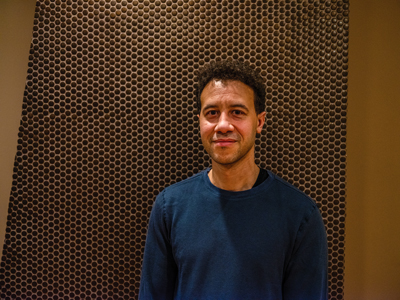
Ellison keeps a daily notebook filled with her to-do lists and sets aside dedicated blocks of time to care for her mother-in-law. She outsources some tasks, such as dinner for Friz-Ellison, by using a meal delivery service.
Many times, hiring outside help, such as an aging life care manager, can reduce stress. Think of the person as a personal assistant who has the medical background to “do everything for your parent,” says Jean Llamas, president and owner of Care Navigators. “They’re an objective outside person who can do as little as an assessment and give you a recommendation on how to take care of your parent,” Llamas says. “They will also train, teach, and educate you on how to have conversations with your parent.”
A care manager initially reviews a person’s finances, determines whether a power of attorney is needed, and assesses whether the person can afford to remain at home or needs to move elsewhere.
Ellison and her husband eventually hired Andrea Donovan, a certified care manager in Inverness.
Donovan connected Friz-Ellison with a caregiver through the Illinois Department on Aging’s Community Care Program. The caregiver now visits several times a week to help with meals, walks, medical appointments, and household tasks.
“It’s nice to have more support,” Ellison says. “It was really overwhelming.”
Donovan also attended Friz-Ellison’s doctors’ appointments and helped navigate health insurance.
Even with support, Ellison says she still struggles with guilt but takes time to care for herself. She sets aside an hour a day for herself.
“I wash my face and work on my web comic. If I don’t have a creative outlet, I get real cranky, real fast,” Ellison says. “But if I have 40 minutes daily creative space, it helps me take a breath, navigate the world, and process some of the things I’m handling.”
Sandwich caregivers need support
Sandwich caregivers often feel isolated and overwhelmed. Becvar encourages them to seek help early through neighbors, relatives, and support groups. “Leverage the help that is around you early and often,” Becvar says.
Organizations, including the Association for Frontotemporal Degeneration, the Lewy Body Dementia Association, and the Alzheimer’s Association, offer caregiver support groups, counseling, and care-planning resources.
Many hospitals also offer programs. Northwestern’s Mesulam Institute for Cognitive Neurology & Alzheimer’s Disease has free monthly support groups, facilitated by social workers for caregivers of people with frontotemporal dementia, primary progressive aphasia, and younger-onset dementia.
Rush University Medical Center’s Caring for Caregivers program offers a variety of resources, including individual caregiver counseling sessions. After an initial intake, one-on-one conversations identify needs and provide support.
“We certainly aren’t miracle workers, but we are that resource that can connect and help problem-solve for each unique caregiving journey,” says Diane Mariani, a licensed clinical social worker and Caring for Caregivers program manager.
The program, in conjunction with the Alzheimer’s Association, also offers two monthly virtual caregiver support groups — one in English and one in Spanish.
“There’s a lot of power in finding somebody that’s in your same situation,” Mariani says. “That peer support is huge.”
Experts say one of the biggest challenges for caregivers is sustainability. Becvar says, “For a family caregiver, it’s a marathon, not a sprint.”
Managing the inevitable
Neo doesn’t think in terms of marathons. He envisions a cartoon where the character is tied to the train tracks. “The train is moving slowly, but it keeps coming,” he says. “And there’s nothing you can do.”
A data science and software engineering professional, Neo says, “I’m a planner and problem solver.”
At home, he has made the bathroom accessible, found meal delivery services, managed his mom’s finances, and more.
“The caretaker becomes very important in your life,” Friz-Ellison says. It makes a big difference, she adds, “if you’re in the kind of environment that accepts you for who you are, what’s going on in your life, and is respectful of the journey.”
Sometimes, the plans Neo develops to make things easier aren’t actually easier for his mom. “So I’ll have to make another one that’s simpler,” Neo says. “The skills I’ve spent my entire life building can’t solve for this. I can’t fix it, which is really tough.”
For now, he tries to make sure someone talks with his mother daily. “But the interactions aren’t deep. Her ability to communicate is limited,” he says, adding, “My wife has really met my mom where she is. She knows my mom better than my mom knows herself. It is a huge mental burden.”
Neo describes the constant decision-making as a burden, too. “Every interaction in this ongoing conversation is about terrible tradeoffs that you are delaying making, or have to make soon,” he says.
Long-term, he would like to direct-hire home aides for his mother and eventually use Medicaid to afford a care facility when home care is no longer viable. He’s hoping his brother, who lives out of state, will help shoulder the estimated minimum yearly costs of $80,000. “I personally can’t commit to that. I have kids,” Ellison says.
Elder care is so expensive, he adds. “It’s ‘How much of the kids’ resources am I willing to give over to my parents?’ That’s awful.”
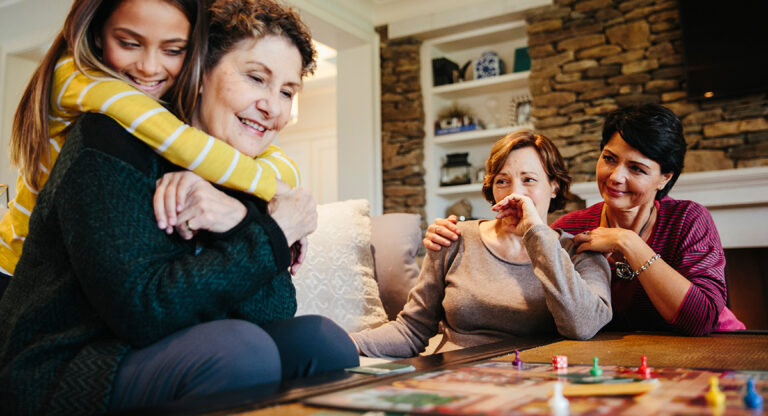
The family has reached a point where Ellison tries to focus less on managing every crisis and more on creating moments together. Her mother-in-law comes upstairs for brunch. She plays Yahtzee, works on puzzles, or watches children’s television with her grandchildren. Ellison says it’s good for everyone.