
John is a journalist, environmentalist, and author of 19 books. In his nearly 50 years of professional journalism, he has won 19 awards for investigative reporting.
Why older caregivers are turning environmental concern into political action

Fact checked by Shannon Sparks
As a care manager for my late father, it rarely occurred to me to become politically engaged, even though in my work as a beat reporter in the late 1970s, I saw the worst of Chicago’s South Suburbs and South Chicago politics.
Ironically, when my father descended into the bottomless abyss of Alzheimer’s, my political awareness sparked into action. Why get into politics in my seventh decade?
I had spent more than 30 years as an on-again, off-again environmental volunteer. I had a near-mystical experience when rare sandhill cranes landed in my driveway. The majestic birds were calling to me. Still, it took decades for that moment to crystallize into political action focused on environmental policy, climate change, habitat loss, and increasingly severe weather.
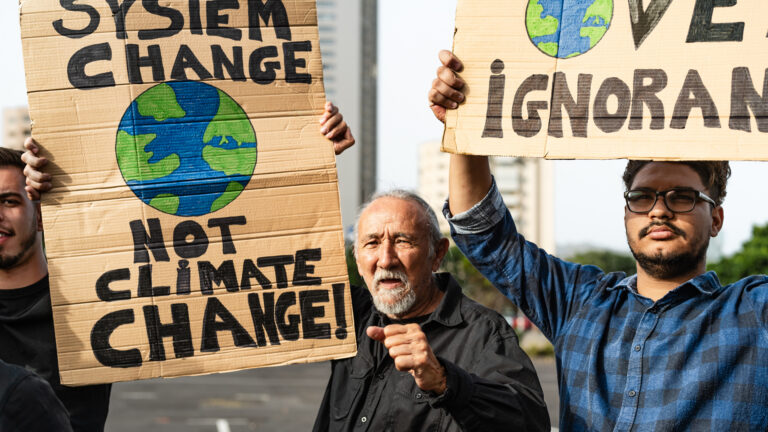
I’m hardly alone. About 10,000 baby boomers are turning 65 every day. While not all share my level of concern about the environment — I view it as an existential threat — hundreds of thousands have taken to the streets. They protest at banks that finance fossil fuel companies and join national groups such as Third Act, founded by environmental activist Bill McKibben.
Much of this later-life activism stems from a sense of responsibility. Baby boomers benefited from relatively low inflation, rising home equity, and affordable higher education. Yet along the way, we also became heavy consumers — driving large vehicles, taking long-distance trips, and living in large homes — all powered by fossil fuels.
One of Third Act’s core beliefs is encouraging older Americans to recognize their leverage in shaping change: “As a generation, we have unprecedented skills and resources that we can bring to bear. Washington and Wall Street have to listen when we speak, because we vote and because we have a large — maybe an overlarge — share of the country’s assets. And many of us have kids and grandkids and great-grandkids: we have, in other words, very real reasons to worry and to work.”
Gray-green activism may not have arrived a moment too soon — arguably not soon enough. Political attention has been pulled elsewhere, including another war in the Middle East. While many analysts expect long-term growth in clean energy, the transition resembles turning an 18-wheeler in a tight parking lot.
Still, older adults are increasingly active, as petroleum-based products — from food to jet fuel — rise in cost. Has this surge in activism changed public opinion?
“Public opinion hasn’t shifted much,” writes David Wallace-Wells in a New York Times opinion piece: “44 percent of Americans say they worry a great deal about climate change, which is just a point or two below the moments of peak alarm in 2017 and 2020.” The same survey also notes that 4 in 5 people want their countries to address climate change even more strongly.
Yet, the leadership class has moved on, Wallace-Wells writes. “Five years ago, world leaders talked about warming in self-consciously apocalyptic terms; now they talk about the green transition as though climate weren’t part of the story at all.”
Still, older Americans are taking their green activism to new heights. From street protests to volunteer work, they are investing their time and resources in environmental causes. Many are retired and treat their volunteer work almost like a second career. A large share are also caregivers and grandparents.
I see activists everywhere, from my local Audubon Society chapter to forest preserves. Many are also master gardeners who volunteer daily to help others grow food and flowers. The University of Illinois Extension alone boasts nearly 6,000 volunteers working with more than 2,900 school and community partners. (I serve on the local extension council.)
The most flexible aspect of green activism is that you can get as involved as you like. Those interested in policy advocacy can work with groups such as Citizens’ Climate Lobby. Others can focus on hyperlocal efforts through community organizations tied to their ZIP code. You can work on anything from natural area restoration to recycling. There’s no shortage of local projects.
As I’ve discovered, green activism offers a triple benefit. It gets you into the world, connects you with engaged communities, and can improve well-being while making a local dent in a global threat. Choose one issue you’re passionate about. All ecology is local, and you can start where you live.