How caregivers navigate guilt and loss when their caregiving responsibilities end
Susan Skeldon, 72, of Joliet, Illinois, remembers the worry she felt when she became her mother’s primary caregiver. She feared that she was abandoning her husband, Chuck, to focus on her mom.
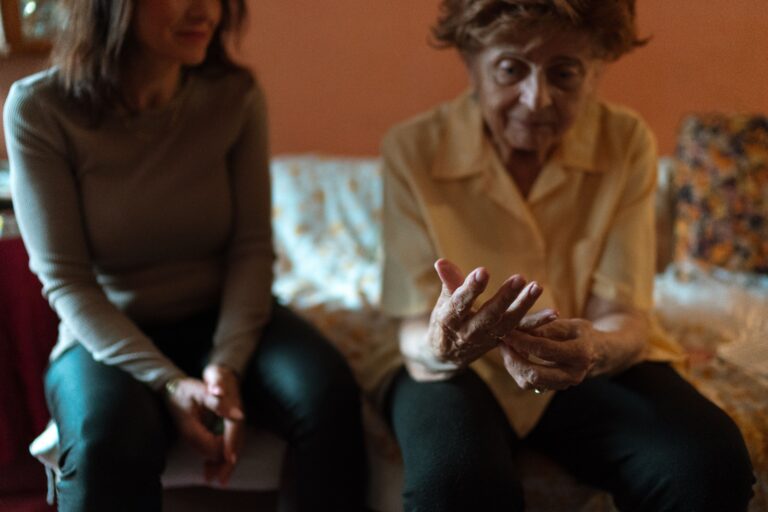
Skeldon was in her 60s when her 93-year-old mother, Mary Duchene, fell ill with pneumonia that left her frail and in need of daily help. Rather than placing her in a nursing home, Skeldon and her husband brought Duchene home, where Skeldon cooked, fed, bathed, and comforted Duchene, as well as cleaned the house and did other chores.
It was during the Covid-19 pandemic, Skeldon recalls, and most people were stuck at home. “I literally became a prisoner in my own house,” she says.
Her worries around neglecting her relationship with her husband were well founded during that time of intense caregiving. The couple had been married for 42 years.
Yet, she says, “I’d do it again in a minute.”
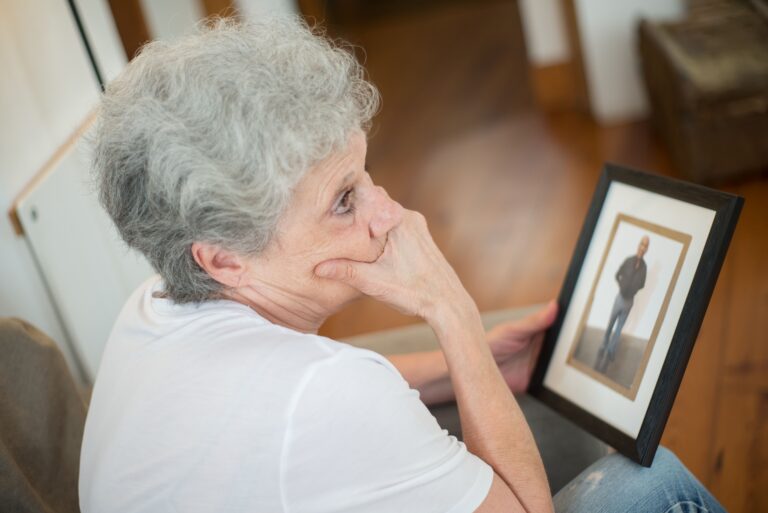
Duchene died 18 months later, in 2021. And Skeldon suddenly found herself navigating not only grief but guilt.
When grief goes on
Caregivers commonly feel guilty about their changing relationship with the care recipient and about neglecting other aspects of life to care for the person. Resentment may arise if the work overwhelms the caregiver or if the person feels unappreciated. And through it all, grief often plays an ongoing role.
“Everybody goes through the grief process. It’s expected. It’s natural. And everybody grieves in their own way,” says Derek Vincent, a grief counselor with the Center for Grief Recovery and Therapeutic Services in Chicago.
But while grief is expected, guilt and resentment aren’t necessarily part of that process, Vincent adds.
These feelings go beyond commonly recognized grief responses, which include denial, anger, and acceptance. In most situations, grief’s intensity lessens over time, although there is no universal timetable. For some, however, grief persists, interfering with daily life. Prolonged grief disorder involves persistent, disabling grief following the death of someone close.
In 2022, experts added prolonged grief disorder to the Diagnostic and Statistical Manual of Mental Disorders, the American Psychiatric Association’s manual for classifying and diagnosing mental health conditions.
“The research says that about 10% of caregivers suffer from prolonged grief disorder,” says Patrice Martin, social worker and grief counselor with Lightways Hospice and Serious Illness Care in Joliet, Illinois. “It often occurs with the ensuing death of a child or from an unexpected, unnatural event,” like a violent assault or car crash, Martin says. Past trauma, including post-traumatic stress, may also complicate a caregiver’s experience with grief.
Clinicians diagnose prolonged grief disorder when symptoms last for at least a year after the death and include intense longing or preoccupation with the person who died, along with symptoms such as disbelief, emotional pain, or loneliness.
Finding a way through
In many cases, varying levels of guilt and resentment accompany grief. The caregiver begins to relive episodes when, out of frustration, anger, or impatience, things went wrong, Vincent says.
It could be something as simple as a malicious look, a mean or derogatory word, or an intentional delay in feeding, bathing, or changing the loved one. Or it can take the form of lashing out either physically or emotionally. Sometimes caregivers experience guilt if they feel relieved after their family member’s death.
If regret over these memories eventually grows into deep-seated remorse, it then turns into guilt, Vincent says. At some point in the process, “the caregiver starts to become a different person,” Vincent adds. The individual may lose their sense of identity through the loss of employment, friends, independence, personal time, or money. The caregiver may also resent having to do the caregiving while others in the family do not.
“That can be very difficult,” Vincent says.
Sometimes guilt manifests itself in a feeling that the caregiver has abandoned other loved ones, as in Skeldon’s case.
Because her mother was terrified of the dark, Skeldon slept near her, on the loveseat in the downstairs living room, for months on end. In the morning, she would rise early, rush upstairs, prepare herself for the day, and attend to her mother until 9 that evening. In between, whenever she could, she would clean the house, do laundry, and make meals.
The experience bookended another experience Skeldon had with loss, in the early days of her marriage. She’d cared for her sick father until he died at 52 from lung and brain cancer in 1979. Skeldon was 23 and had just gotten married. The couple spent that first year visiting Skeldon’s father at the hospital multiple times a day until he was finally allowed to come home to die.
Decades later, within weeks of her mother’s death, Skeldon’s husband was diagnosed with advanced metastatic prostate cancer. He died about three years later — the third great loss in Skeldon’s life.
When she finally went to grief counseling, she arrived riddled with sadness and guilt. “I’ve watched so many people die,” she says, “I never had time to grieve for all of them.” She says she feels that especially for Chuck.
During her counseling sessions, Skeldon’s therapist helped her explore the nature of her guilt. They examined her past caregiving situations to better understand her intentions at the time with compassion.
Skeldon’s therapist also guided her through imagined scenarios, prompting her to envision Chuck in the room. What would Skeldon say to him? What would Chuck say?
They talked about several other topics related to Skeldon’s experience, including the realities of caregiving and the impossibility of doing everything.
Skeldon met with the therapist for more than a year, with sessions gradually shifting from weekly to monthly. And it helped, she says. The therapist “helped me believe that everything I did was the right thing at that time, that nobody could have planned for this. It was all unexpected,” she says.
Ultimately, she came to forgive herself for feeling like she’d neglected her husband, for feeling like she’d not grieved enough for her parents.