Innovations in senior care
Technology is reshaping how care is delivered, monitored, and experienced. In this roundtable, experts in senior care and health innovation share the tools, trends, and strategies that are enhancing safety, independence, and human connection — while exploring the balance between digital innovation and personal touch.
What is the most exciting technology innovation you have seen to assist in care?

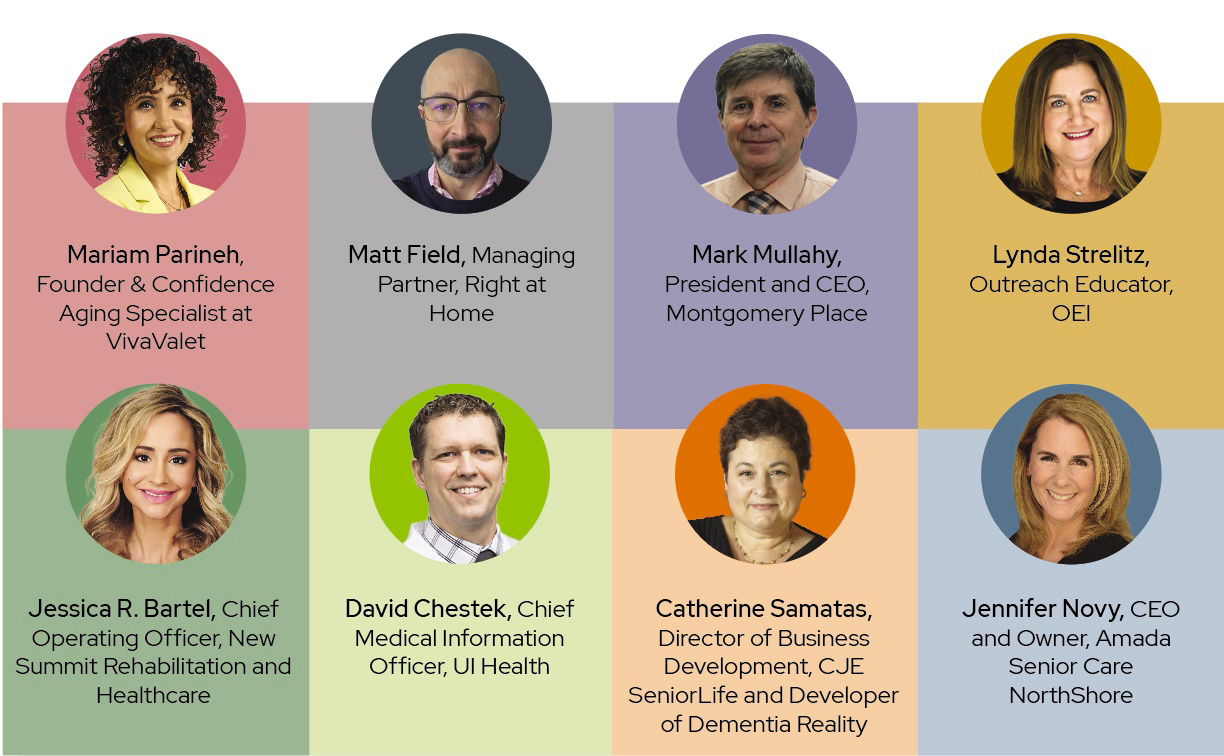
Jessica R. Bartel: The ability to predict decline using electronic medical record-integrated analytics. When technology aligns with clinical intuition, care becomes proactive, not reactive — protecting residents before crises occur.

Mark Mullahy: Artificial intelligence, without question. While it may sound surprising to cite AI when speaking specifically about care, its transformative potential spans body, mind, and spirit. No other technology today has the capacity to support clinical decision-making, enhance cognitive and emotional engagement, and strengthen personal connections all at once. AI is becoming the connective tissue that ties together holistic well-being.
Jennifer Novy: Remote monitoring tools that combine fall detection, activity patterns, and alerts are especially exciting. They support earlier intervention, aging in place, and peace of mind for families — while still promoting independence for individuals who are alert and oriented.

David Chestek: Ambient listening is a technology currently taking healthcare by storm. It listens to the conversation between a patient and their provider, transcribes it, then summarizes it. It will then push a note into the system for the provider and group educational and action items for the patient and place them into the patient summary.
 Mariam Parineh: Continuous health monitoring has been a major step forward because it gives older adults real control over their own care. Devices like continuous glucose monitors, including the FreeStyle Libre, remove the daily frustration of finger-prick testing and give clear, easy-to-read information that builds confidence quickly. When someone can manage their condition without fear or guesswork, their psychological and behavioral confidence rises almost immediately. Beyond health, simple tools like voice-activated assistants help people navigate the day with more ease and less stress. Anything that preserves confidence is the most powerful innovation in aging.
Does more technology mean less human touch?
 Matt Field: Not when it is used with intention. The right technology takes busy work off caregivers so they can spend more time actually connecting with clients. When tech supports the care relationship rather than replacing it, you gain more personal interaction, not less.
 Lynda Strelitz: The best care technologies empower a human connection, not replace it. For example, captioned telephone technology helps seniors with hearing loss stay connected to friends and family over the phone — long-distance connections which would be impossible otherwise. Those connections are what matter; the technology merely facilitates them.
 Catherine Samatas: Technology doesn’t inherently reduce human touch, but poor use can. When applied thoughtfully, it streamlines tasks and frees caregivers to focus on people. If it replaces conversations or increases use of screens, connection suffers. Ultimately, organizations must ensure technology supports care — not substitutes for it. Intentionality makes the difference.
Jessica R Bartel: Technology should never replace compassion — it clears space for it. When staff aren’t buried in paperwork, they can sit, listen, and connect. The right tools return caregivers’ time to caregiving.
David Chestek: Ambient listening as described above is a perfect example of how technology can mean more human touch. It allows the provider to turn away from their computer (where they used to sit dutifully typing while patients talked). Instead, they give their undivided attention, knowing all the important details are being captured.
Jennifer Novy: Nothing can replace human touch, socialization, compassion, and love. But technology, when used well, reduces routine tasks and emergencies, freeing caregivers to focus on meaningful, relationship-centered care rather than replacing human connection.
How does new technology improve care in your setting?
Catherine Samatas: Dementia Reality is an experiential learning platform that immerses professional and family caregivers in the world of dementia through virtual reality. By experiencing both the perspective of a person living with dementia and that of a caregiver, participants gain empathy, insight, and practical skills — transforming care and fostering truly person-centered care.
Matt Field: It gives us real insight into what is happening day to day. We can spot risks earlier, respond faster, and tailor support to each person. Families stay informed and clients feel safer, which makes the whole care experience calmer and more predictable.
Jessica R Bartel: It reveals patterns we used to miss — hydration shifts, subtle vitals, sleep disruptions. These ‘quiet signals’ let teams act early, reducing hospital trips and preserving peace of mind for families.
What technologies are showing the most promise right now?
Mariam Parineh: Technologies that reduce cognitive load rather than add complexity and that are built into behavioral repetition. Continuous glucose monitors and wearable trackers provide real-time clarity that helps people manage their health more confidently. Hearing devices that connect seamlessly to smartphones or televisions are enormously empowering because they reconnect people to conversation and entertainment. Telehealth and telemedicine reduce the stress of travel while keeping people better connected to their providers. Voice-activated tools remain one of the simplest ways to support vision, mobility, and communication challenges.
Jessica R Bartel: Tools that personalize care — fall risk alerts, medication tracking, dehydration prediction. These technologies speak our clinicians’ language: ‘Let’s protect this resident.’
Jennifer Novy: Wearable safety devices, medication management systems, and telehealth platforms are showing strong results, particularly when integrated with caregiver oversight and clinical follow-up. Even our senior communities are using technology to promote safety.
Catherine Samatas: Digital documentation tools are the backbone of modern healthcare. They ensure fast, accurate, and consistent data flow from point of care to clinical teams, families, and regulators. By reducing duplication and errors, they enable real-time updates — critical for timely interventions, better outcomes, and unlocking the full potential of smart-care technologies.
Are there any downsides to the use of technology for care?
David Chestek: New technology expands what one person can accomplish. Used wisely, it improves patient care; used carelessly, it can introduce errors. The greatest risk with generative AI is its potential to hallucinate. Although this risk is decreasing with advanced models, we consistently remind providers to verify AI outputs for accuracy.
Catherine Samatas: Technology can improve care, but it also risks eroding human connection. Automated systems may replace empathy, create emotional disconnect, and lead to over-reliance on dashboards — causing caregivers to miss subtle cues. Many feel monitored rather than supported. To support person-centered care and dignity, technology must enhance relationships, not compromise them.
Matt Field: Some clients find new devices confusing or intrusive, and cost and privacy are real considerations. There is also the risk of relying on tech at the expense of human presence. Good care still depends on relationships, and technology has to follow that lead.
Jessica R Bartel: Tech becomes a barrier only if implementation lacks heart. Proper onboarding, listening to frontline staff, and trauma-informed change management create successful adoption.
Some technological options are expensive. Are there technologies that can reach a broader population?
Jennifer Novy: Simple solutions like medical alert systems, automated pill dispensers, and video check-ins are affordable, easy to use, and deliver significant safety and communication benefits. Clients who want to stay home can use some technology to reduce risk.
Mariam Parineh: Absolutely. Most smartphones and tablets already include accessibility features for hearing, vision, reminders, dictation, and communication. Voice-activated assistants provide low-cost support for routines like medication reminders, alarms, and simple information that reduces anxiety. Medication reminder apps and basic pill dispensers are inexpensive but make a meaningful difference. Sometimes the most impactful tools are the ones people already own but have not been trained to use confidently.
Jessica R Bartel: Telehealth, remote monitoring, and automated vitals are now accessible and powerful — reducing transfers, supporting safety, and giving residents dignity.
Mark Mullahy: Smartphones, smart watches, and AI-based tools are remarkably accessible and powerful. For example, if I want to adopt a Mediterranean diet and shop smarter, I can use an AI tool on my phone, set my budget, and immediately generate a customized grocery list and recipes. Within minutes, I am equipped to make healthier choices. Everyday devices now serve as personal wellness assistants.
Name one technology you recommend to assist families.
Lynda Strelitz: Technology that keeps seniors engaged with important people in their lives. Often, family members live far away, making it difficult to assist with care. As seniors typically experience hearing loss, staying connected by phone is challenging. Captioned telephone technology lets seniors stay in touch and engaged, bringing reassurance to everyone.
Jennifer Novy: Reliable fall detection with real-time alerts. Falls are a major fear for families, and rapid response can prevent serious complications and hospitalizations. Ongoing data also helps tell a story — showing illness progression and signaling when it’s time for additional care at home.
Matt Field: For dementia care, smart behavior tracking that notices early changes in routine or mood would have a great impact. Families often see problems too late. Technology that flags shifts in sleep, wandering, agitation, or hygiene allows us to step in sooner and prevent avoidable crises.
Catherine Samatas: Wearable exoskeletons can transform life for older adults and families by improving mobility, safety, and independence. Lightweight, easy-to-use designs help seniors walk, climb stairs, and stay active — delaying higher levels of care. They reduce caregiver strain, prevent burnout, and promote dignity, enabling aging in place and better quality of life.
Are there any technological options covered by Medicare, Medicaid, or other programs?
Mark Mullahy: Medicare covers eligible medical devices that are FDA-approved and ordered by a physician. Increasingly, new devices incorporate AI or connected technologies, such as blood pressure cuffs that automatically transmit readings to clinicians each morning. As innovation accelerates, more devices with embedded intelligence will fall under this coverage framework.
Lynda Strelitz: Some tech options are available at no cost or at a reduced rate without needing insurance. Funding for captioned telephone service, for example, is paid through a federally managed program per the Americans with Disabilities Act. Depending on what services a family needs, there may be other options that cover technology costs.
David Chestek: Wearable technology such as Fitbit, Apple Watch, and Oura Ring has rapidly expanded and become more affordable. Insurers increasingly recognize that most care occurs outside the hospital and now cover remote patient monitoring, enabling earlier interventions and reducing the likelihood that small issues escalate into conditions requiring hospitalization for patients.
If you could invent the next big device, what would it be?
Mark Mullahy: I would focus on a technology that meaningfully supports individuals living with Alzheimer’s disease and the families who care for them. Whether it is enhanced early detection, cognitive support, behavioral insight, or communication assistance, this is the area where innovation could change lives most dramatically.
Catherine Samatas: I’d create a device that detects caregiver anxiety in real time and prompts a quick three-breath exercise. This simple, evidence-based intervention reduces stress, prevents burnout, and creates a calmer environment. By improving caregiver well-being, it enhances quality of care — especially in dementia support — making a powerful difference for both parties.
Matt Field: I would create an attractive, simple wearable that combines fall detection, medication reminders, vital sign tracking, and instant video connection. Baby boomers care about how devices look, so it has to feel modern and discreet. A device like that would offer safety without drawing attention to itself.
Are any technologies overrated in their value?
Mariam Parineh: Technologies that assume a high level of digital literacy often overpromise and underdeliver for older adults. When a tool requires constant updates, subscription chaos, complex troubleshooting, or even small wires or many parts, they become a burden rather than support. In those cases, the caregiver ends up doing more work, not less. Real value comes from tools that work quietly and predictably in the background. Anything that adds friction, even if it looks impressive, is not truly helpful.
David Chestek: Consumers should stay appropriately skeptical at first, since marketing often exaggerates a technology’s capabilities. I love technology, but its real value emerges only when a tool is paired with the right need and user group. It’s ultimately a relationship between person and technology, and no single solution works for everyone.
Mark Mullahy: Some consumer wellness devices — and certain smart home products marketed to seniors — promise more than they deliver. Technologies that generate a high volume of non-actionable data or require constant troubleshooting tend to be more distracting than helpful. Effectiveness, not novelty, is what matters.
How are you addressing privacy and autonomy concerns among people who feel uneasy about monitoring?
Jennifer Novy: We emphasize choice, transparency, and consent — clearly explaining what data is collected and why it matters. Seniors remain active decision-makers, and our caregiver care notes are shared daily with both clients and families to reinforce trust and collaboration.
David Chestek: Privacy is a real concern as technologies advance. At UI Health, we make sure the patient is at the center of everything we do. We vet every new technology to ensure it meets and often exceeds our privacy and security expectations. We always ask patients if it’s ok to use recording technology and encourage any questions they may have.
Mariam Parineh: Autonomy must be the starting point, not an afterthought. Older adults should decide what data is shared, how alerts are handled, and what level of monitoring feels comfortable. Their right to self-determination should be protected. When people understand the purpose of a tool and feel in control of it, resistance decreases, and trust grows. Education and permission matter as much as the device itself. Confidence cannot grow without respect for personal choice.
Mark Mullahy: Respect for autonomy always comes first. Technology must be a choice, not an expectation. Aging in place looks different for every individual, and our approach must honor personal comfort levels. We emphasize transparent communication, informed consent, and meaningful control over what data is collected and how it is used.
Does technology improve safety, health, or quality of life compared with traditional home modifications?
Mariam Parineh: Both have important roles, and the best outcomes come when they work together. Home modifications create physical safety, while technology can add a layer of reassurance and routine support. For someone with high digital confidence and even a passion for it, technology can dramatically enhance quality of life. For someone who is hesitant or overwhelmed, the intrusion of tech may cause more harm than good, and the basics of home safety may make a bigger difference. The key is choosing the solution that best supports their confidence, because confidence is what drives real independence.
Matt Field: Yes. Home modifications reduce hazards, but technology adds real-time awareness. It can detect changes or emergencies long before anyone notices them. That early insight often improves outcomes, reduces hospitalizations, and increases confidence for clients who want to age safely at home.
Lynda Strelitz: Absolutely. If a senior has hearing loss, for example, captioned telephone technology enables seniors to age in place, knowing they can reliably conduct their own affairs and reach help if needed. But more importantly, they can engage confidently with the important people in their life, dramatically improving quality of life