
Catherine, a freelance writer and editor based in Chicago, has written about healthcare and higher education for more than two decades. With 90-plus awards in communications, she is well-versed in storytelling.
Technology takes on more responsibilities to support caregivers

Fact checked by Jim Lacy
In hospitals, nursing homes, and even private homes, robots are quietly transforming healthcare. These machines assist with everything from lifting patients and monitoring vital signs to transporting supplies and stocking shelves. In doing so, they’re reshaping what care looks like in the 21st century.
Healthcare is demanding work. Nurses, home health aides, and family caregivers often face long hours, physically strenuous tasks, and emotional strain. Enter caregiving robots — machines designed to supplement human effort. Even tech evangelicals say: These robots are here to help, not replace, human care and contact.
Robots in caregiving bring consistency to care routines, performing their duties with precision and reliability at any hour — a critical advantage in hospitals and long-term care facilities facing chronic staffing shortages, according to the World Health Organization.
The global eldercare assistive-robots market will reach $9.85 billion by 2033, expanding at a compound annual growth rate of more than 14%, according to Grand View Research. A systematic review of 41 studies published in Geriatric Nursing found that care robots for older adults can improve quality of life and reduce depressive symptoms. However, the primary driver remains easing caregiver burden.
In hospitals, robotic systems lift and transfer patients, reducing staff injuries and enabling safer patient mobility. In home settings, companion robots remind older adults to take medications, guide them through exercises, and provide conversation to ease loneliness.
“I have no doubt that AI and [other] technology will find ways to help people either care for themselves or lessen the difficulty that caregivers go through.”
Beyond physical support, robots play a growing role in patient care. Some robots use sensors to track vital signs, detect falls, and alert medical teams. For decades, surgical robots have enabled doctors to perform minimally invasive procedures with greater accuracy, shortening recovery times and reducing complications.
More recently, AI-powered systems assist in rehabilitation, guiding patients through customized physical therapy exercises.
The technology is particularly promising in managing chronic conditions and dementia care. Robots can prompt people to follow routines, provide medication reminders, and offer cognitive stimulation through games or conversation. In fact, social robots significantly reduced depression and loneliness among older adults in long-term care facilities, according to a June 2024 study in JAMDA, the Journal of the Post-Acute and Long-term Care Medical Association.
Balancing technology and humanity
Despite their advantages, caregiving robots raise ethical and social questions. Can a machine truly offer companionship? What happens if caregivers rely too heavily on technology at the expense of human interaction?
S. Jay Olshansky, PhD, a professor of epidemiology and biostatistics at the University of Illinois Chicago, says caregiving is already in crisis. “It’s nothing short of dramatic,” he says.
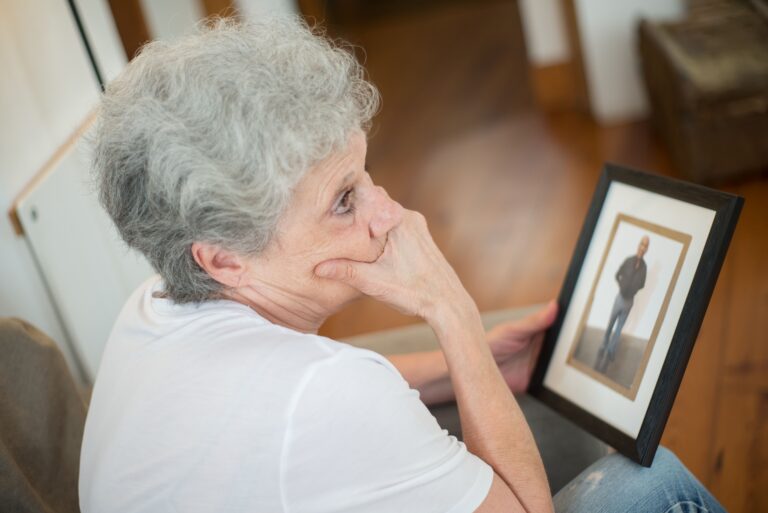
The proportion of the population needing care is rising rapidly due to longer lifespans and aging baby boomers, he adds. And family caregivers often face their own health risks, including stress and burnout. This can force them to step back from caregiving — further straining an already short workforce.
Research suggests that integrating robots into caregiving requires thoughtful design, ethical oversight, and training. Robots tend to work best when paired with human judgment, creating a partnership rather than a replacement.
“I have no doubt that AI and [other] technology will find ways to help people either care for themselves or lessen the difficulty that caregivers go through,” Olshansky says. “It may very well enable people to stay in their homes and be monitored and cared for remotely.”
Public sentiment and awareness around caregiving robots are also shifting. Earlier this year, 55% of American adults polled said they would be interested in having a robot assist with elder or child care support, according to the online research company YouGov.
Care in motion
Hospitals worldwide already have adopted robots for nonclinical tasks, freeing staff to focus on direct patient care. At the University of California San Francisco Health, 25 autonomous transport robots, known as TUGs, navigate hallways to deliver medications, lab specimens, and meals. In Japan, Panasonic’s HOSPI robot does similar work. And in Germany and Switzerland, F&P Robotics deployed Lio during the Covid-19 pandemic to assist with tasks such as disinfecting rooms and checking body temperatures.
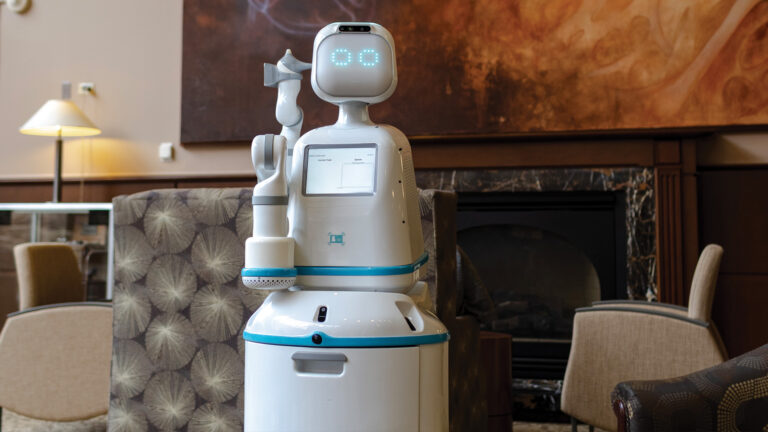
At Endeavor Health Edward Hospital in Naperville, Illinois, two autonomous service robots, nicknamed Moxi, roll through hallways, cheerfully beeping “hello” to nurses and patients. Diligent Robotics’ Moxi ferries medications, supplies, and equipment between floors so nurses can stay with patients instead of leaving for errands.
Nurses were skeptical at first, but quickly embraced the robot, says Elmer Dulce, director of nursing for cardiology telemetry at Edward Hospital. “For those of us old enough to remember “The Jetsons,” Moxi looks a little like Rosie the robot maid,” he says, adding that once the staff saw how Moxi could help, they realized the robot wasn’t there to replace them but as an extension of care.
Since deployment three years ago, Moxi has taken more than 119 million steps (the equivalent of going around the world 2.1 times) and made 102,000 supply deliveries. “Satisfaction went through the roof because we weren’t running off the floor anymore,” Dulce says. “We could be at the bedside, doing what we became nurses to do — care for people.”

Mapping and integrating the robots took about six months before full implementation. Now, both Edward Hospital and its sister facility in Elmhurst use six Moxis between them to support clinical teams. Outside hospital leaders have visited to observe the program.
Dulce’s advice: “Keep an open mind. Don’t see it as a threat. Moxi isn’t taking away nursing — it’s giving it back.”
Robots are working on a more personal level, too. Israeli company Intuition Robotics designed an AI-driven robotic companion, ElliQ, specifically for older adults. The robot converses, suggests activities, plays music, reminds users to take medication, and connects with family or caregivers via an app. Data from a pilot study in New York show a 95% reduction in user loneliness.
Hospitals in Singapore, Canada, and Belgium use the humanoid robot Pepper to greet patients and guide visitors, performing receptionist and wayfinding roles. Robots also are making an impact in long-term care and home settings for older adults.

In Japan and abroad, healthcare and hospitality settings utilize Pepper, developed by Japan’s SoftBank Robotics. Standing about 4 feet tall and equipped with cameras, sensors, and facial-recognition software, Pepper reads and responds to human emotions.
A 2019 Japanese study of Pepper in an eldercare facility found that it could lead exercise sessions for residents. The research also showed these robots work best as collaborators, enhancing engagement while preserving human oversight.
Another popular model, the seal-shaped therapeutic robot Paro, developed in Japan and approved by the U.S. Food and Drug Administration as a medical device, has been used in nursing homes to engage residents, reduce anxiety, and foster social interaction.
 Meanwhile, researchers at Waseda University in Tokyo are building AIREC (Artificial Intelligence-driven Robot for Embrace and Care) — a prototype humanoid capable of assisting with physical tasks. The robots could eventually complete everyday tasks such as repositioning a bedridden person, cooking scrambled eggs, folding laundry, and helping with basic movement — though the technology still has far to go. Researchers estimate readiness for medical- or care-facility deployment around 2030 at an initial cost of about 10 million yen (roughly $65,000). The project reflects Japan’s urgent search for robotic solutions amid a critical caregiver shortage.
At Edward Hospital, Dulce says the robots’ efficiency has directly improved patient satisfaction. “With Moxi taking care of deliveries, nurses can answer call lights faster and spend more time addressing pain or comfort needs,” he says. “Our goal is always to reduce falls and infections and to be present for our patients. Moxi helps us do that.”
Olshansky cautions that inequities could arise. “Any new technology, including robotics or remote monitoring, is likely to be inequitably distributed. Those who can afford it will benefit. Those who can’t may be left behind. The goal should be to build equity into deployment from the start.”
For healthcare leaders and policymakers, the emerging story is not robots versus people, but how robots and people can collaborate. Capturing that nuance — how machines support empathy, reduce burden, and elevate human care — will matter more than any bottom-line motivated promise of automation.