

An award-winning journalist, Katie has written for Chicago Health since 2016 and currently serves as Editor-in-Chief.
Each issue, we ask our readers to share their insights on a specific topic. Read on, and watch for our next question on social media and in our weekly newsletter.
Q: How do you feel about the increasing prevalence of AI and robotics in caregiving?
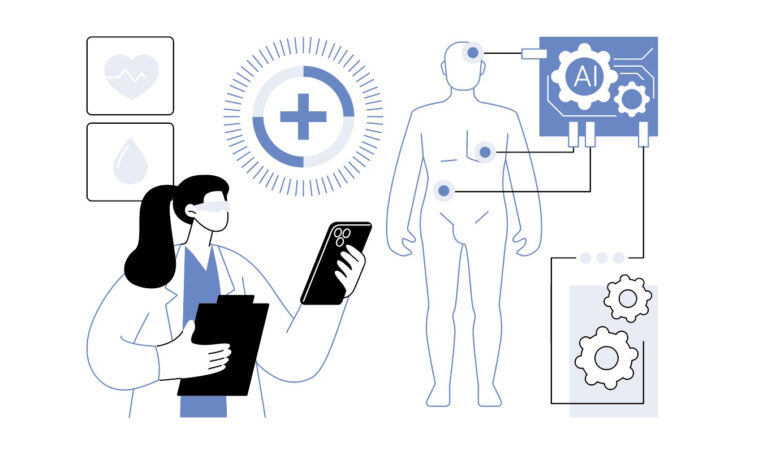
AI provides us with the ability to cull through thousands of data points in seconds to minutes. Questions that would take weeks or years to answer previously are now possible nearly on demand. Patient care will be enhanced with better access to outcomes analysis. I’m excited for the doors this opens in the technology world that will lead to better patient care!
—Gail Peace, South Loop
I feel it is inevitable given the aging population and fewer workers available to serve this growing demographic. I welcome using it responsibly. I also accept it as a necessary outcome but can only hope safeguards are being built in (e.g., audits to ensure medicines are correctly administered and human caregivers there as backup, if needed.)
—Patrick Shaughnessy, Pilsen
I have mixed feelings. A robot can’t give care and can’t replace the human touch, but if there are no people available, and it is generally used for the purposes of monitoring and measuring (temperature, respiration, fall precautions, etc,) then I am ok with it.
—Caren Perlmuter, Skokie
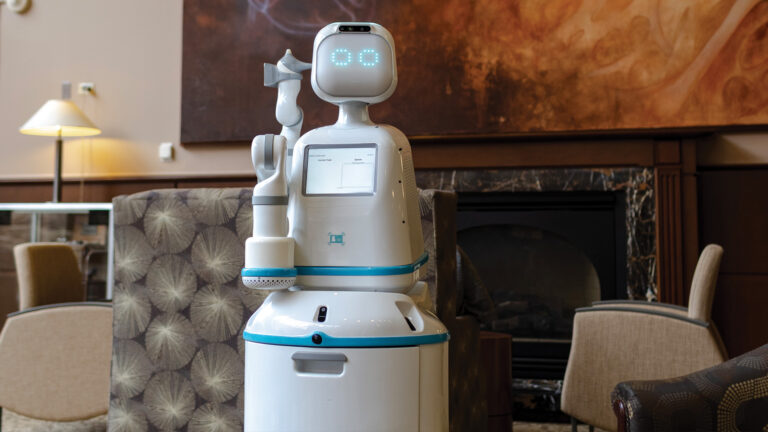
I feel it is a good thing in some ways. For instance, the robots can run errands to Lab, Pharmacy, Central Supply, Nuclear Medicine, and Dietary. This saves on staff that could be at the bedside instead, not running all over the hospital running errands.
AI is a different story. I would have doctors reading echocardiograms for example all day between seeing patients in the ER and on the floors, always in a rush. I feel that the doctors should read the test but have AI do a secondary read on them. The doctors would have to sign off after AI does the secondary read. There is always a chance the doctor would not do this because he is busy, tired, rushed, so there has to be a system in place for this. AI should NEVER replace the human. It is just not safe. Humans aren’t always safe either, but we are there to check each other and work together. AI is all too new to be let loose on many.
—Margie Brandt, via email
I am open to this in caregiving if there are benefits to the people receiving the care. I think it’s good to explore different ways to improve the experience for both patients and caregivers.
—Beth Comer, Westlake, Ohio
As an aid to caregivers and healthcare professionals, AI can be hugely helpful in synthesizing information to assist in diagnosing and treating a diverse array of conditions. Yet not all caregiving is improved merely by insights from data. Elderly care, for example, relies also on a high level of empathy and sensitivity to the dignity of the patients. In other words, some caregiving requires a higher emotional IQ than others. And AI models of course do not have feelings, so they cannot naturally be empathetic. They have to be specifically trained for empathy. I have no doubt that the technology will eventually develop to that level, but we still have some way to go before we get there.
—Ezra Becker, PhD, West Loop
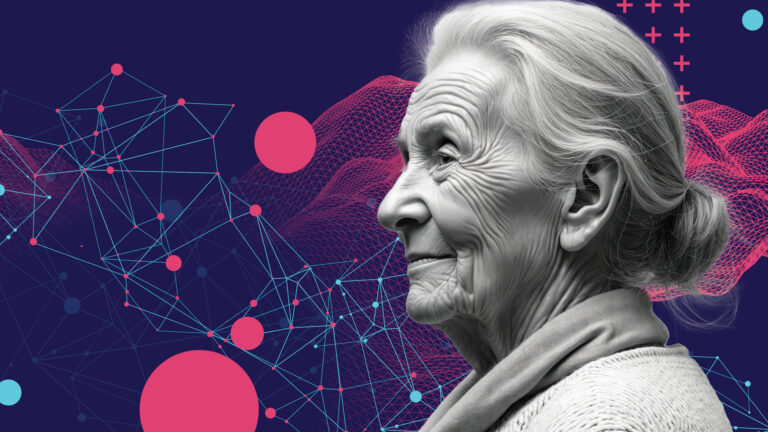
I am comforted by the thought that as I age, there will be this kind of help to allow me to stay in my home as long as possible. There are many seniors living alone without a strong support system who will really benefit from these advancements.
—Erin Sullivan, Buenos Aires, Argentina