
Nicholas Cozzi, MD, is an emergency physician and emergency medical services medical director based in Chicago, with a focus on pre-hospital care, disaster response, and medical communications. He is passionate about translating frontline experience into public policy and cultural understanding. Read more
Insights from an ER physician
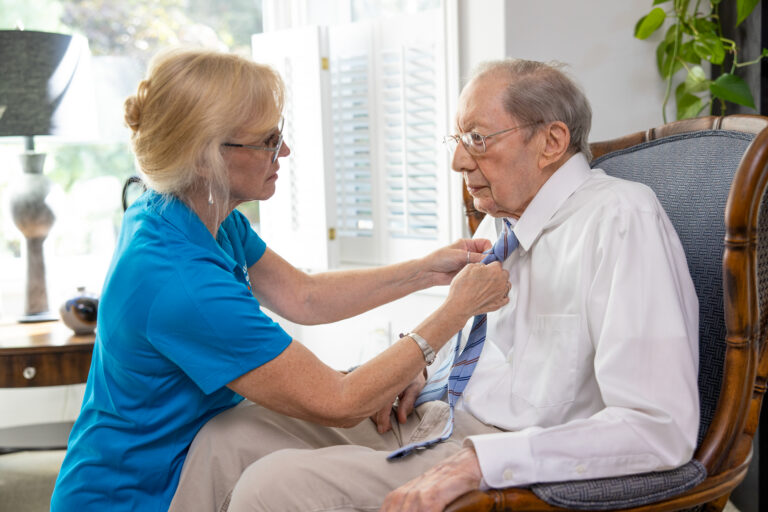
A quiet promise, often unspoken, guides me through every shift as an emergency physician: Every caregiver deserves to feel safe in the care my team and I provide to their loved one.
In the emergency department, caregiving looks different. It isn’t bathed in warm light or underscored by calm music. It happens under fluorescent bulbs, in hurried whispers, among machines that beep in defiance of peace. Yet within that chaos, there is a sacredness, moments when human strength reveals itself in its purest form.
I think of the father I met years ago, pushing his developmentally delayed adult son in a wheelchair through the New York City Marathon. When I asked what drove him to complete 26.2 miles, he said, “Because this is what love looks like for us.” I’ve carried that image ever since — love moving forward, one exhausted stride at a time.
I watched my mother care for my Aunt Colleen for decades — steadfast, patient, and often unheard. I saw how deeply it hurt when doctors dismissed her concerns or failed to believe her. Watching her carry that weight shaped me, and I vowed that, no matter how busy or tired I am, I will always listen to patients’ loved ones.
Caregivers in the emergency department live out that same marathon every day. They arrive at 3 in the morning with a parent who’s fallen again, their faces lined with the fatigue of long nights and hard decisions. They tell me stories of devotion: of feeding schedules and medications, of bruised dignity and gentle forgiveness. Sometimes the hardest truth I must share is that the body is nearing its end — that this fall, this infection, this breath may be part of their final chapter.
In those moments, I speak quietly about the process of dying, about how it can also be an act of grace. And before I walk away, I often say, “May God’s love be with you.” Because I want them to feel what I feel — that love still fills the room, even here in an urban emergency department trauma bay.
My friend and colleague, Jeff Goodloe, MD, once told me, “Being a doctor is more about the ‘Dr.’ and less about the last name.” He’s right. It’s the role, not the résumé, that matters. Being a physician, nurse, or EMT skilled enough at your craft means the stories you carry wound you. It’s the quiet tax of this work. But it’s also what makes it holy. We learn, over time, to let those wounds become reminders: that we were present for someone’s most fragile hour, and that presence itself is part of healing.
“They remind me that caregiving is less a task than a transformation, a way of seeing the world through a lens of grace.”
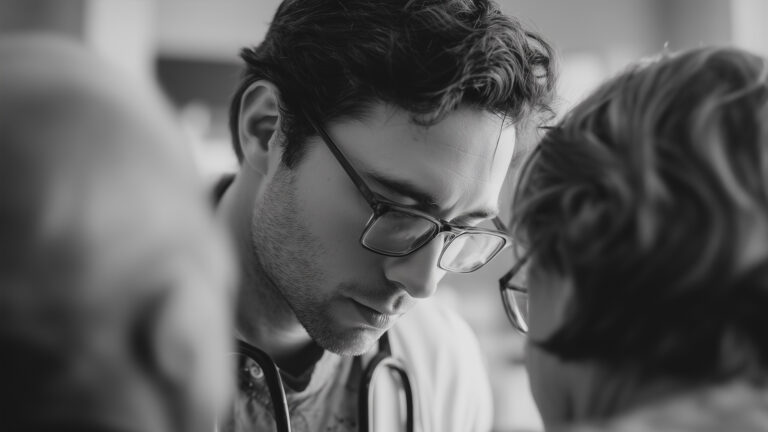
Some family members bring shoeboxes full of records, decades of clinic notes and lab results, desperate for someone to take them seriously. They’re not looking for miracles. They’re looking to be seen. And even when we can’t fix the problem, we offer that recognition: We see you. You matter. We care. You are safe. That, I’ve learned, is the greatest medicine we have — helping others, especially caregivers, feel seen.
During the first weeks of Covid-19, I held iPads in front of patients as their loved ones said goodbye through screens. I remember the stillness that followed — the silence after the call faded. Their families weren’t there, but I was. That presence has weight; it never leaves me.
And then there are the moments that feel smaller but aren’t: the homeless man sleeping in the waiting room, who has no caregiver but me. I can offer him a sandwich, a cup of ice, two warm blankets, and 20 minutes of darkness and quiet. It’s not a cure. But sometimes, caregiving is as simple as giving someone a place to rest their head.
All of these moments — the marathons, the midnight falls, the shoeboxes, the whispered prayers — live within me and other clinicians I work beside. They remind us that caregiving is not confined to families or titles. It’s a shared human inheritance, passed quietly from one heart to another.
When I step outside after a long night, the city still half asleep, I think of the lives that have passed through our hands — the laughter, the fear, the steadfast love. They remind me that caregiving is less a task than a transformation, a way of seeing the world through a lens of grace. And I trust that when my ownshift is over for good, those I’ve cared for will be there — not to offer praise, but to meet me in the same light that once filled our rooms, a reminder that we were seen, and loved, and never forgotten.