A daughter’s fight for medical attention and cognitive justice
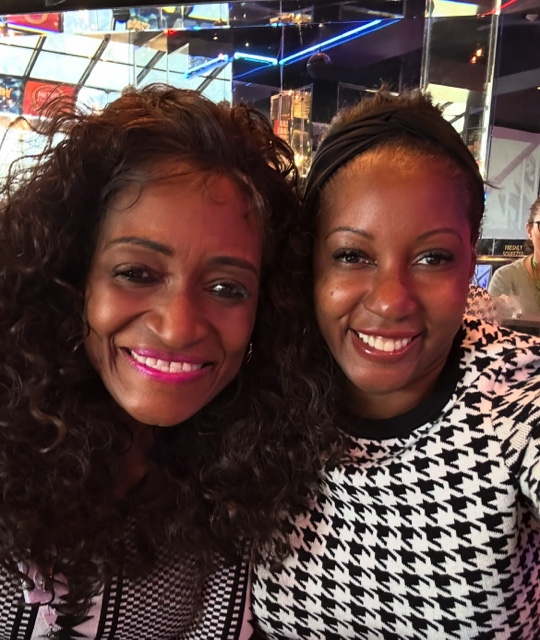
Chicago area caregiver and patient advocate Shon Lowe is navigating two cognitive impairment journeys at once: her mother’s dementia and her own mild cognitive impairment. And she says she’s done waiting for the medical system to catch up.
Lowe learned about brain health while watching her mother navigate a health system that often didn’t listen, was slow to act, and failed to see the urgency facing Black women. Her mother, a longtime community activist, had even volunteered with the Alzheimer’s Association before receiving her own diagnosis of frontotemporal dementia — an irony not lost on Lowe.
At 51, Lowe began noticing changes in her own thinking. She asked questions, pushed back, and eventually paid for her own genetic test when doctors dismissed her symptoms as menopause-related. Despite a family history, they told her she was too young to show symptoms of dementia. After the results confirmed a genetic link to Alzheimer’s, she waited months for neurological and neuropsychological appointments. With proof in hand, specialists could no longer brush off her concerns.
Lowe is understandably frustrated with a system that frequently gaslights and ignores women, particularly Black women. She wrote an op-ed in the Chicago Tribune in March, describing her disappointment and exasperation. Lowe spoke with Caregiving magazine about what it means to be a caregiver and a patient at the same time, and why Black women must insist on being taken seriously.
Caregiving: Your op-ed described your mother’s diagnosis as coming after years of fragmented care that prevented your family from acting early. How did that experience shape the way you approached your own health?
Lowe: It made me realize I could not just wait and see. I knew that dementia ran on both sides of my family, and I knew that as a Black woman I was already at higher risk. The statistics show that [older] Black Americans are nearly twice as likely as white Americans to develop Alzheimer’s. I could either avoid the conversation and hope for the best, or do something most people in our communities are discouraged from doing, which is ask questions early and insist on being taken seriously. I chose to pursue genetic testing before anything got worse. That was the turning point.
Caregiving: But getting that test wasn’t straightforward.
Lowe: Not at all. My primary care doctor and my gynecologist both told me my brain fog, fatigue, and cognitive changes were menopause. I know my body. I know my family history. I kept saying there is more to this than menopause. They weren’t hearing it. So I looked up the APOE-4 test on my own, paid for it through my flexible spending account, walked back into that office with the results, and said: You have got to give me a referral. I need a neurologist. Here is the paperwork. I was ready to be a bulldozer if I had to.
Caregiving: What did the neurologist say?
Lowe: I was ready for another dismissal. But he looked at the paperwork and he actually said, “How did you get this test?” He was genuinely surprised. He ordered an MRI, a neuropsychological evaluation, and a field test in the office. The imaging and testing showed cognitive decline. When I got that news, I thought first about my family, and then I made myself a promise. I am not leaving this world without a fight. I told myself: I am doing everything I can, starting now.
Caregiving: What does “everything you can” look like in practice?
Lowe: I turned down the drugs my neuropsychologist offered. One was 20 years old with limited efficacy, and the other carries a risk of brain bleeding. Instead, I did brain mapping to identify the specific areas showing decline, and now I do neurofeedback therapy once or twice a week to strengthen those areas. It doesn’t cure anything, but it helps support the parts of the brain that need it. And then there are the proven lifestyle interventions like diet, exercise, and staying engaged with people. I treat those as nonnegotiable now. The way I think about it is that medication treats symptoms, but a holistic approach treats the “why.”
Caregiving: You’re also your mother’s primary medical advocate. How do you hold both of those roles at once?
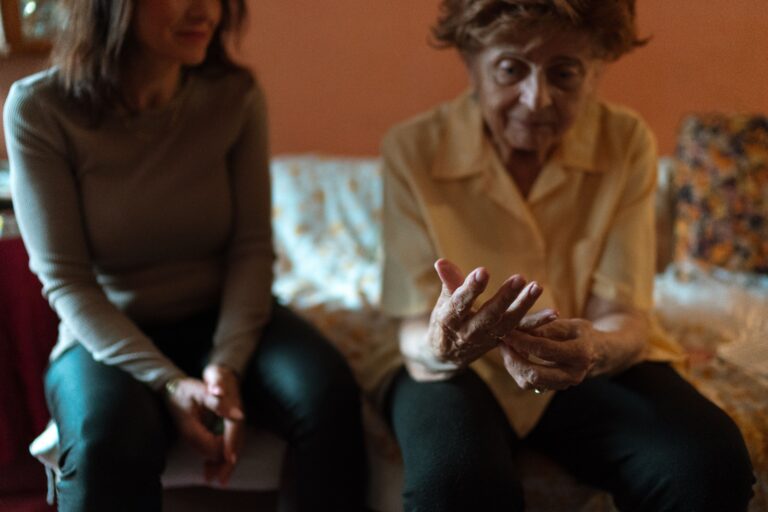
Lowe: Some days it is hard. But being with her through this journey — sitting with her at appointments, learning the statistics, watching how the system treats Black patients with dementia — is part of what made me fight so hard for myself. I manage her medical appointments, I navigate her paranoia, I show up when she has surgery. The hardest thing I’ve had to learn is to meet her where she is. If she wakes up convinced her phone is stolen, you don’t argue. You just sit with her. You let her look. She finds it, she says, “Praise God,” and you move on. You accept her reality in that moment. That’s the only way through.
Caregiving: You’ve mentioned specific barriers facing Black communities around Alzheimer’s awareness and of a skepticism of clinical trials. For people who may not know, what are some of these roadblocks?
Lowe: Two key issues are knowledge and trust. And you can’t separate them. While many Black Americans have some general awareness of Alzheimer’s, very few know what causes it or how to manage their risk. A large number don’t even know that Black people are at higher risk than white Americans. That knowledge gap is real.
But even when people gain the knowledge, you’re still dealing with trust. And that mistrust goes straight back to Tuskegee. It is passed down generation to generation. You can’t just show up in a Black community with a clinical trial flyer and expect people to sign up. You have to first acknowledge the history, validate the community’s concerns. Say “yes, this happened.” And then you build from there, through relationships, not pamphlets.
Caregiving: What does effective outreach actually look like?
Lowe: In the Black community, the church has always been the foundation. It’s where people trust, where people gather, where messages carry weight. That kind of community-rooted approach, done with authenticity, is the model. It’s not a one-time event. It’s a relationship. And it’s the only thing that really moves the needle on both the knowledge gap and the trust issue at the same time.
Caregiving: You’ve also become an advocate for changing how routine physicals handle brain health. What would you like to see?
Lowe: A cognitive baseline should be standard, just like a bone scan, just like a cholesterol test. We now have blood-based biomarker tests that have been approved. We have MRIs. How can a doctor compare where your brain is at 60 if they have no record of where it was at 50? And for our community especially, this matters because hypertension, diabetes, and heart disease, which are so prevalent among Black Americans, all have a direct impact on cognitive health. Every time blood sugar swings up or down, it affects the brain. People don’t know that. I want the biomarker test to become as routine as checking your blood pressure. You turn 50, you get a baseline. You go from there. People say MRIs are too expensive. Treating the disease is far more expensive.
Caregiving: What would you tell a Black woman reading this who is worried about her own memory but hasn’t been able to get her doctor to take her seriously?
Lowe: Trust yourself. You know your body, and you know your family history better than any doctor does. If your concerns are being dismissed, that is not the final word. It’s the beginning of a longer conversation you are entitled to have. Keep a journal. Document your symptoms, the dates, the specific things you’re experiencing. Bring someone with you to appointments who can advocate alongside you if you need that support. And know that you are allowed to get a second opinion, to seek out a specialist, to pay for a test if you have to. The system isn’t always set up to look out for us. We have to look out for ourselves and for each other.
Caregiving: You’re also writing a book. What do you hope readers take from it?
Lowe: I want them to laugh. I’m a sense-of-humor person. I don’t move through life holding my breath. I want to approach the whole caregiving and dementia world with lightness, because that’s how I survive it. My neurologist told me that staying engaged, being out among people, living fully, is some of the best medicine there is. He told me I’m going to be the best version of myself at 53 if I stick with him. I’m holding onto that. What I know is that I am not wasting whatever time I have. Keep hope alive. That’s the whole message.